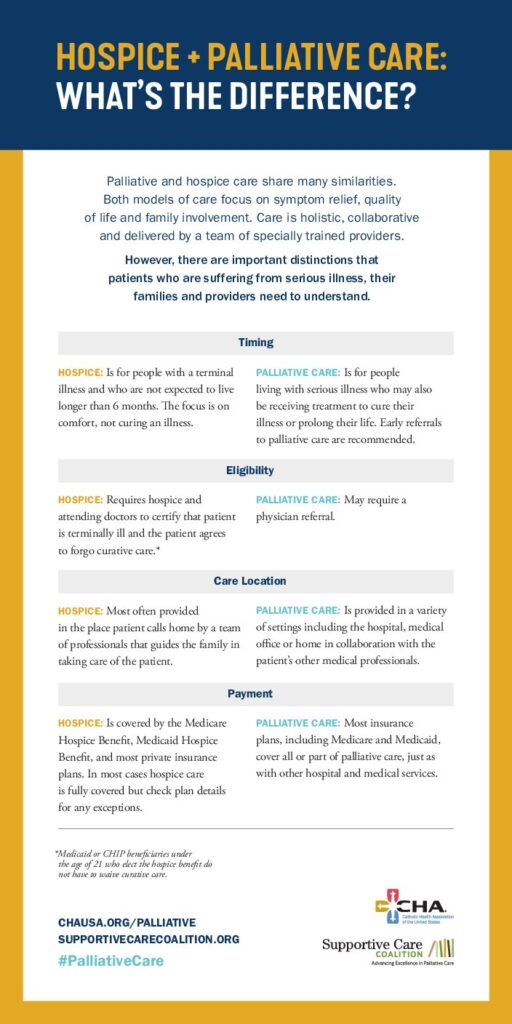
Last November our Health Notes contained the key points about hospice and palliative care and were presented as a brief overview with explanation of major similarities and differences of the two. While typically we do not replicate topics year to year, given the dynamics and current distress in our world, we thought it imperative to shed light on these topics again as a way to possibly eliminate some of the suffering so many are enduring right now. The prayer is that this article will educate and bring awareness so that we as a society see hospice and more importantly palliative care as a means of hope.
Palliative care and hospice are similar in that they both seek to prevent a person’s pain and suffering and improve quality of life. They both can be delivered as a collaboration of efforts from healthcare providers, community supportive services and spiritual leaders however similarities can end there. Why is this? Simply put it’s because the goal of palliative care is to improve quality of life by eliminating pain and stress associated with disease however the focus is on prevention and quality improvement during treatment of a disease. Hospice however focuses on all of these things as well however it is intended for patients who are no longer receiving treatment from their disease but instead have made the decision to end curative treatment of disease and live as pain-free as possible during their remaining days.
Recently there has been more awareness about the value hospice care adds to individuals as they near the end of life. Hospice is a way to enhance the quality of life for an individual during their final days, weeks and months and allows them to enjoy their family and loved ones comfortably and pain free. In general, healthcare as a whole is working to shift towards a model where living life pain free is encouraged and advocated for. Pain free however, does not mean using opioids and other pharmaceutical pain relievers but rather implores us to identify where an individual’s pain really is. Does their pain come from their disease or from emotional pain? Is their pain coming from unnecessary testing? What about their spiritual pain? All are vital to a person’s overall health and should both be given adequate attention and treatment. This shifted focus has helped draw more awareness to hospice care and its ability to improve a person’s quality of life as they are approaching death. Typically, hospice care begins when a person’s life expectancy is less than six months however that is not always the case and choosing to begin hospice care should be a personal decision made between an individual, their healthcare team and immediate family members.
Palliative care however is not for those whom have stopped treatment but rather is intended to meet those same needs of improving quality of life and living pain free while they are still battling their illness. Interestingly enough, palliative care is actually referred to as the hallmark of Catholic healthcare. It has been traced back to early Christian days when Jesus sought to heal the pain and suffering of individuals that weren’t dying but who were living in pain. Modern day healthcare does not perform miracles as Jesus did but for those living with chronic diseases, it can help to cure some unnecessary pain by eliminating unnecessary testing, caring for the spiritual or emotional health needs of an individual and increase their happiness or overall health. This can lead to improving their quality of life and in some instances extend their life expectancy. This is because palliative care is centered on the person and healing them holistically rather than just their disease. For instance, a chaplain can be seen as a palliative care team member. This is because the pain a person living with chronic illness may have could not be associated with their illness but rather due to a deep spiritual issue. Chaplains, such as those affiliated with our Hospital Chaplaincy Ministry here at VITALity, work to heal the spiritual needs of an individual. In some cases, those wounds may be far greater than the person’s medical illness. This is what holistic care of a person focuses on, healing the whole body, mind and spirit, not just the physical illness. This month’s article was a lot to process but I hope you take the time to read and absorb this information. It is a stigma of palliative care that their only focus is at the end of life when really palliative care can begin the first day of a new chronic illness diagnosis. The hope is that one day palliative care will be introduced when a person is diagnosed but for now all we can do is to help educate on the value of what both hospice and palliative care can bring. They both aim to comfort and heal pain while improving the quality of life. Their difference is when this care is started. If you would like more information or have questions about palliative or hospice care or on our Hospital Chaplaincy Ministry here at VITALity, you can find more information on our website as 0511f90e42.nxcli.io. We hope this article brings you peace and comfort and helps to bring awareness to these powerful sources of hope and dispels any previous fears and misunderstandings about hospice and palliative care. Until next time, stay healthy, safe and well.
Let us together lift up our needs to our God, who is ever-present and always loving
Prayers for those on hospice and palliative care
God of all comfort, be with those who are sick
and suffering. May they receive the medical,
spiritual and psychological care they need; may
they be supported in love by their family and
friends, enabled to live well. We pray,
ALL: GRACIOUS GOD, HEAR US.
God of all companionship, be with those who care
for others in their infirmity. Strengthen them
with the graces of patience, love, joy and peace.
Surround them with communities of care. We pray,
ALL: GRACIOUS GOD, HEAR US.
God of all people, move in our hearts that we
may affirm the value of all human life through our
action and advocacy on behalf of those who suffer.
Open our eyes to see you in the faces of those
affected by serious illness that we may care for them
as we would care for you. We pray,
ALL: GRACIOUS GOD, HEAR US.
Amen