
August is Gastroparesis Awareness Month
Have you ever eaten a heavy meal and felt bloated and sluggish afterward? Or felt full or constipated after not being very active? This could be because research has shown that our digestive tracts also called our gut, is key to our overall health and well-being. Stress, poor food choices, and lack of exercise can all contribute to how well our digestive tracts function. When our bodies are not being fed properly or we don’t manage our stress well, our stomachs are one of the main parts of our body that are impacted. This can result in many different Gastro-Intestinal (GI) related health problems. This month is Gastroparesis Awareness Month so we will be reviewing the role our GI tract plays in our body as well as some GI related health issues and ways to keep our GI tract healthy.
What is the GI Tract?
Our GI tract is comprised of a long tube that begins at our mouth and ends at our anus. The goal of our GI tract is for us to eat foods that are then broken down, processed, and absorbed into our blood streams to send energy throughout our bodies. This energy helps our bodies to grow, heal, repair, and sustain all of our bodily functions.
GERD, IBS, and Gastroparesis
During this long journey, issues can arise that can impede the digestive process. Currently, there are millions of Americans that have GI or digestive health-related issues. Some of the most common are gastroesophageal reflux disease (GERD) and Irritable Bowel Syndrome (IBS). GERD causes acid in our stomach to back up in our esophagus or throat resulting in heartburn and feeling like you have indigestion, both of which are very uncomfortable. IBS is comprised of symptoms that cause changes in our bowel habits and pain in our stomachs that can include diarrhea, constipation, bloating, and more.
Another GI disorder that is not as common is gastroparesis. Gastroparesis occurs when the muscles in the stomach aren’t functioning properly and cause slower than normal movement of food which results in the delay of emptying the food out of the stomach. While not as widely seen as GERD or IBS, it is equally if not more impacting for a person to deal with. Gastroparesis symptoms can include chronic nausea, bloating, weight loss, and feeling full after eating only a small or typical amount of food. It is a difficult disease to manage and like other GI health issues, impacts a person’s everyday activities.
How To Manage your GI Related Issues
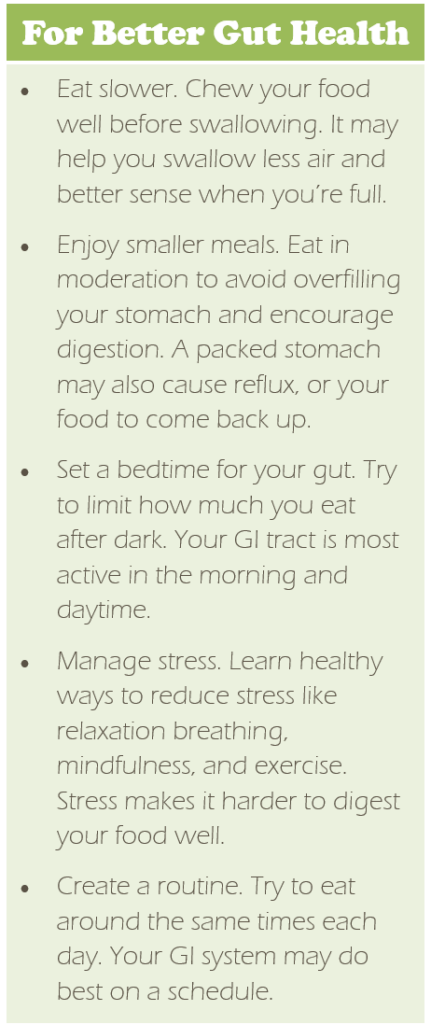
While each of the GI related issues that we’ve mentioned is important and has its own individual causes, many GI related issues can be better managed if a person follows overall general health and wellness guidelines. Eating small, frequent meals that are well balanced and do not contain a lot of processed foods is best for our digestive system. Getting proper sleep is another way to help your gut stay healthy as it gives the stomach time to rest and recuperate. Being sure to get the recommended amount of exercise each day is crucial as well. One of the best ways to keep your gut healthy however is to keep a routine and manage your stress because research has shown that people who manage stress have healthier stomachs and less GI related health issues.



We hope you have learned some important information about GI health, your gut, and how to take care of your digestive system. If you are struggling with any of the GI health issues we mentioned or have questions, please reach out to us. We can connect you with resources or help guide you as needed. Until next time, stay safe and well.