
This month the focus of our Health Notes is on other health areas impacted by the coronavirus these past few months, primarily safety and infection prevention. Many have gone from being active to being very inactive and have been forced to stay home and indoors the past three months. While it was necessary, we need to remember that the less we move the greater our risk for falling, especially in the older adult population.
Did you know that each year more than 3 million older adults are unfortunately treated in emergency departments for injuries related to falls? These numbers continue to go up with the Centers for Disease Control and Prevention estimating that by the year 2030, there will be 7 fall related deaths per hour in older adults. That is a large number of deaths from something that is preventable. Below are some risk factors and prevention tips for falls.
Risk Factors for falling:
- Stay in contact with your provider and let them know if you have had any stumbles or felt off balance recently. Even if you haven’t fallen, sometimes the fear of falling can cause a person to fall.
- Review your medications with your provider as some medications can cause balance issues and may cause you to fall.
- Be sure you have gotten your vision and hearing checked as medical issues related to both these areas may lead to slower reflexes which can cause falls.
- Diabetes, heart disease, nerve, feet or thyroid problems can all affect your balance. Be sure to speak to your provider if you have any of these medical conditions and make sure you are on the proper medication to treat it.
- Stand up slowly. Standing up too quickly can cause your blood pressure to drop which can cause falls as well. When you are sitting or lying down, take a moment to transition from sitting or lying down to standing.
- Learn new environments. If you are in a new or unfamiliar environment, this can sometimes cause confusion which can lead to falls. Be sure to familiarize yourself with where things are such as steps when you enter a new environment.
Preventing falls:
- Get enough sleep. Being tired or sleepy can lead to drowsiness which can cause a person to fall. Try to get the recommended 7-9 hours of sleep each night to prevent falling.
- Use an assistive device as needed to keep you steady when you are standing up or walking. Appropriate use of assistive devices such as canes and walkers can decrease your chances of falling. If you aren’t sure if you are using your cane or walker properly, ask your provider’s office the next time you have an in person or telemedicine visit.
- Wear non-skid shoes or rubber soled shoes that support your feet well.
- Limit alcohol beverages as they can affect balance and decrease your reflexes.
- Take walks, as tolerated and advised by your provider. Many things are still closed or restricted due to the coronavirus but try walking around your neighborhood. Remember to maintain social distancing and where a mask as recommended by the CDC.
- Stay active by gardening, or participating in online chair yoga or other chair exercise classes or stretching. Studies show that the more we sit and don’t remain active, the higher our risk of falling so keep moving!
What to do if you fall: ![]()
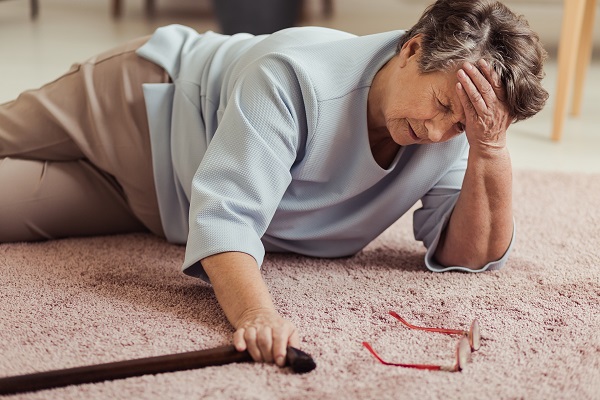
- Remain calm. Falls can be very upsetting and stressful, try not to panic. Begin by taking some slow, deep breaths.
- Stay on the floor or wherever you are, for a few moments to help overcome the shock of the fall.
- Try to figure out if you have seriously hurt anything before you move or attempt to get up. Sometimes getting up after a fall can cause more harm.
- If you determine that you are not in pain and think you can get up safely, try rolling onto your side. Rest for a moment so that your blood pressure can readjust then slowly get up on your hands and knees. Try to crawl to a sturdy chair, bed or sofa.
- Place your hands on the sturdy surface and slide one foot forward so that it stays flat on the floor and keep the other leg bent so the knee stays on the floor. From here, slowly rise up and turn your body to sit in the chair.
- If you determine that you are too hurt to move, stay where you are and call for help or call 911.
- Try to remember to always have your mobile phone or emergency alert device near you, even in the shower, so that you can call or push the button as needed.
A Few Other Reminders to Prevent the Spread of COVID-19
While falls are extremely scary and important to learn about, there are some other things to consider as we move forward from COVID-19. It’s important to remember that as things are opening, we still need to be taking steps to reduce the spread of COVID-19. Below are some tips to remind you of the best ways to prevent the spread of the virus.
- Stay well hydrated and be sure to get enough protein, fruits and vegetables in your diet as this helps you stay healthy.
- Try to stay home as much as possible. If you need to go out, call ahead and see if where you are going has special hours designated for older adults as many places are making accommodations.
- When you are out, be sure to maintain social distancing. Six feet apart is the recommendation.
- Wash your hands frequently for at least 20 seconds with soap and water. If you are out, be sure to carry hand sanitizer with you to use while shopping or in between errands.
- Frequently clean and disinfect areas that are touched a lot such as light fixtures and door handles in your home.
We hope you found this information on fall prevention and ways to decrease the spread of COVID-19 helpful. If you have any questions about what you have read or feel you may need help because you are afraid of falling, please reach out to our Resource and Referral Help Line at:
1-888-VITALity (1-888-268-4825)
If you are in need of a protective mask, please call Nicole Keefer, RN, Director of Parish Nursing at 1-856-426-9123.
Until next time, stay well and be safe.