
Anyone who is beyond the first few decades of their life surely know that aging is not for the faint of heart! Despite many of our best efforts, it is a known fact that our bodies can lose strength, flexibility, balance and stability as we age. Daily activities that once came easily like walking, climbing stairs, bending or even standing up, now become difficult or sometimes feel impossible. We may also find that we don’t bounce back from illnesses or injuries the way we once did which can be quite frustrating and overwhelming. The good news is that there is hope!
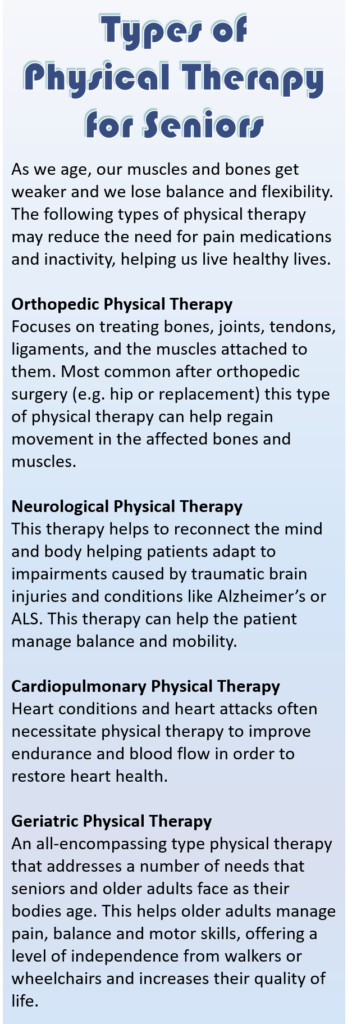
Did you know that regular physical therapy (PT) can help us to maintain muscle and strength? PT focuses on building strength, endurance and mobility with the goal of maintaining independence. While it will not return the vigor of youth, PT can keep us stay active and independent, reduce the risk of falls or injuries, decrease dizziness and pain—and in turn can sometimes curb the need for pain medications.
What are some benefits of PT?
PT can improve overall health since the exercises and motions are geared towards building strength, improving balance and steadiness and reducing pain. This can mean that daily activities like getting dressed, showering and personal care may be accomplished easier and possibly in less pain. Therapists can also assess for other areas that may need improvement. They look at how an individual walks, goes up and down stairs and even how they bend over. They can then provide adaptations for those who have trouble performing these and other activities. In some cases, therapists may limit the need for use of canes or walkers, in other instances the therapist may feel it necessary to provide training and assistance in using these tools properly for maximum benefit. Physical therapy could also help some individuals dealing with incontinence by helping them focus on pelvic floor muscles to coordinate, relax and contract them to reduce the feeling of always having to go.
Can PT help to prevent falls or injuries?
Falling is a very big concern for many as we age. We mentioned above that PT can improve strength, flexibility and balance. Regular PT sessions to keep muscles strong and flexible can also improve balance making falls less likely. If falls do occur the stronger muscles and improved balance can help minimize the extent of any injuries. These exercises and stretching can also help reduce pain and stiffness, increase range of motion and coordination that in turn can help to prevent other injuries from occurring as well. The therapists can also look at things in your home that may be dangerous and potentially lead to fall or injury.
How do I look into starting PT?
If what we are sharing about strength, balance and falls resonates with you, speak with your medial provider for a prescription for PT. PT is typically covered on an outpatient basis and may take place in a number of settings, such as hospitals, clinics or even in home. Inpatient options include nursing homes, rehabilitations centers and assisted living facilities. Every person is different, that’s why it’s important to speak to your provider so they can help determine what is best for you. Outpatient PT may be covered by Medicare Part B while inpatient services are covered under Medicare Part A. It can also be covered partially or fully by commercial insurance plans or Medicaid plans considering medical necessity. Check with your provider before you look into PT on your own to see if they think it’s a good fit. They can also tell you what your insurance may cover.
We hope you found this article useful. Please reach out with any questions or for more information on fall prevention or PT.